The Table That Built America: Soul Food, Down-Home Cooking, and the New American Kitchen
This is the story of that table. And the chefs who set it.
By jerome amosMarch 1, 2026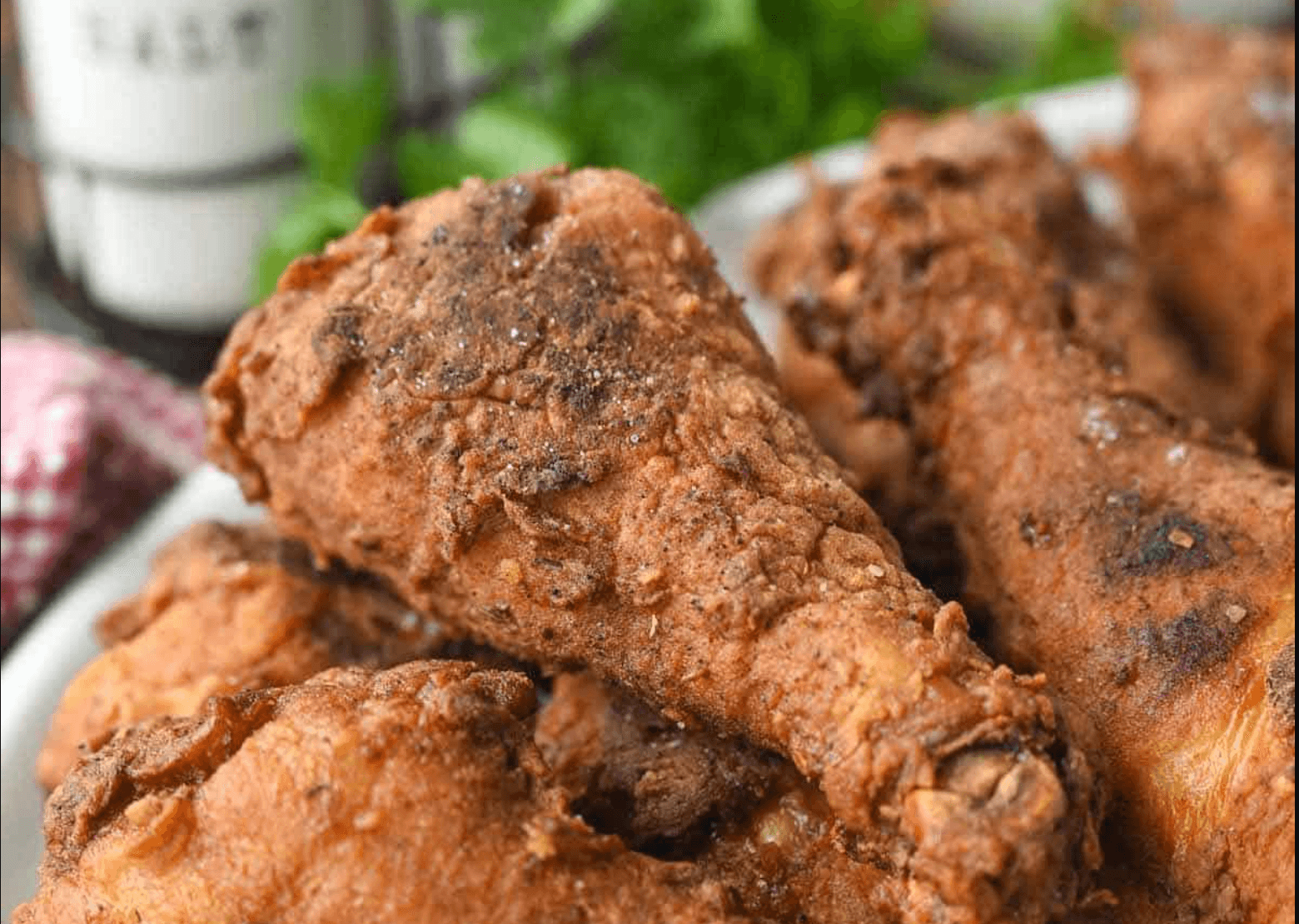
This is the story of that table. And the chefs who set it.
There is a table in American history that most people have never seen. It was set in church basements and on plantation grounds, in Harlem apartments and Alabama farmhouses, on riverboats rolling north during the Great Migration. It was set by hands that were rarely thanked and names that were rarely written down. But the food that came from that table — the mac and cheese, the fried chicken, the collard greens, the cornbread, the black-eyed peas — that food went on to feed a nation.
This is the story of that table. And the chefs who set it.
Where Soul Food Comes From
The term "soul food" is younger than most people think. It first appeared in print in 1964, during the rise of Black pride, when many aspects of African American culture were being celebrated for their contribution to the American way of life. The term honored the ingenuity and skill of cooks who formed a distinctive cuisine despite limited means. But the food itself is centuries older.
Its roots trace to 1619, when the first group of enslaved Africans arrived in what would become the United States. They brought with them agricultural knowledge, cooking techniques, and ingredients — okra, black-eyed peas, sorghum, yams — that would become the backbone of a new American cuisine. These Africans intermingled with Indigenous peoples and absorbed European culinary techniques. What emerged from that intersection was something entirely its own.
Enslaved people were given the parts of animals and the cuts of land that no one else wanted. Pig feet, intestines, neck bones. Tough greens. Field corn. And from those materials, they built a cuisine of extraordinary depth and flavor. Food historian Adrian Miller, author of Soul Food: The Surprising Story of an American Cuisine, One Plate at a Time, describes the key difference between soul food and Southern food this way: soul food is intensely seasoned, layered with spice and savory sauce in a tradition that traces directly back to West African cooking, where sauces are built to carry flavor and fire.
What the mainstream world calls "Southern food" exists, in large part, because of African influence and Black American ingenuity. That truth has taken a long time to reach the center of the conversation. But it is undeniable.
The Church Supper: Where the Table Becomes Sacred
Before we talk about the dishes, we have to talk about where they were eaten. Because in Black American life, the church supper is not just a meal. It is an institution.
There is a long-standing tradition in African American churches: after the preaching, singing, and praying are over, everyone gathers for Sunday dinner. The tradition was refined by African Americans in the rural South, where congregations often spent the entire day in church — from Sunday school through evening service. Most small country churches had no kitchen, so women prepared lavish meals at home and spread them across picnic tables on the church grounds.
Cooking and eating may have been part of the hush harbor worship practices of enslaved Africans long before emancipation. After slavery ended and Black people began establishing their own churches, they held "dinner on the grounds" — congregation-wide feasts that served multiple purposes at once: fundraising, fellowship, and feeding those in the community who could not afford to feed themselves. The church table was a place of both celebration and survival.
For Black Americans particularly, the church was a refuge — a place where you could dress with dignity, gather without threat, and be fully human in a society that spent considerable effort denying that humanity. The food that came with it was an extension of that sanctuary. Sweet potato pie and caramel cake. Fried chicken, greens, crowder peas, cornbread, and potato salad. Each dish carried the weight of who made it and what it meant to make it well.
From these churchyard feasts came the Sunday dinner tradition that millions of Black families still honor today — a table set mid-afternoon, after service, with the extended family gathered around it. A weekly reset. A way to release the past week's weight and restore what the coming week would require. As one writer put it, these meals were "a feel-good reset button" — fried chicken, collard greens, mac and cheese, rice and peas, the whole spread — a living archive of love and shared history.
James Hemings (1765-1801): The Man Who Put Mac and Cheese on the American Table
If you have ever pulled a pan of baked macaroni and cheese from the oven — crusty on top, creamy underneath, the smell filling whatever room you are in — you are in the presence of James Hemings.
Hemings was born into slavery in 1765 in colonial Virginia. His mother was Betty Hemings, an enslaved woman, and his father was John Wayles, a white enslaver — which made James a half-sibling of Thomas Jefferson's wife, Martha. When Wayles died, his estate, including the entire Hemings family, passed to Jefferson. James Hemings arrived at Monticello at around nine years old.
In 1784, Jefferson was appointed U.S. Minister Plenipotentiary to France and took the nineteen-year-old Hemings with him to Paris — specifically to have him trained as a chef. What followed was one of the most remarkable and unacknowledged chapters in American culinary history. Hemings apprenticed with some of the finest culinary minds in Paris, including the caterer Monsieur Combeaux and the lead chef in the household of the Prince de Condé. He paid for French language lessons out of his own wages. And by 1787, he had been appointed chef de cuisine of Jefferson's residence on the Champs-Élysées — managing a staff of white cooks and preparing meals for European artists, statesmen, scientists, and aristocrats.
He was, by any measure, the first American chef trained in France.
Among the dishes he mastered and brought back to the United States were crème brûlée, meringues, whipped cream, French fries, ice cream, and macaroni and cheese — which he called "macaroni pie." His version was built by cooking the pasta in a mixture of milk and water, then layering it with cheese and butter before baking. It was a high-end dish in its time, served to the political elite. Today it is the centerpiece of every church supper, every family reunion, every Thanksgiving table in Black America.
The historical irony is painful and deliberate. Credit for popularizing macaroni and cheese in America has often been given to Thomas Jefferson, or to Jefferson's cousin Mary Randolph, whose cookbook The Virginia House-Wife included the recipe. But Jefferson did not cook. He entered the kitchen only to fix the clock. The meals served at his celebrated dinners — including the famous June 1790 Dinner Table Bargain, where Hamilton and Madison settled the question of where the nation's capital would be — were created by James Hemings.
Hemings negotiated his freedom from Jefferson on a single condition: that he first train his brother Peter to replace him as chef at Monticello. He spent three years doing so and gained his freedom in 1796. When Jefferson became president and wanted Hemings to cook at the White House, Hemings agreed — but only if Jefferson wrote to him directly with the request. Jefferson never did.
James Hemings died in Baltimore in 1801 at thirty-six years old. He left behind a handwritten inventory of kitchen supplies, a few recipes, and a cuisine that became America's.
Hercules Posey (c.1748-1812): Commander of the Kitchen
At the same time that James Hemings was cooking for Jefferson, another enslaved chef was feeding the other founding father — and doing it with the authority and precision of a general commanding troops.
His name was Hercules.
Hercules Posey arrived at George Washington's Mount Vernon as a young man and worked his way from scullery tasks to master chef. By the mid-1780s, he was head cook at Mount Vernon, producing elaborate multi-course meals for Washington's guests with nothing more than open hearths, iron pots, and the deep culinary knowledge he had developed over years of study and practice. When the national capital moved to Philadelphia in 1790, Washington had Hercules brought north to cook for the president's household.
Martha Washington's grandson later described him as "as highly accomplished a proficient in the culinary art as could be found in the United States." He ran a kitchen with eight assistants — stewards, butlers, undercooks, waiters — and cooked soufflés, puddings, fricassee chicken, and elaborate state dinners for members of Congress and foreign dignitaries. He was also, by all accounts, impeccably dressed and a commanding presence on the streets of Philadelphia — a man of visible dignity in a city where he was legally property.
Pennsylvania law held that enslaved people who resided in the state for more than six months were legally free. Washington was fully aware of this and regularly rotated his enslaved household staff back to Virginia before that threshold could be reached. Hercules knew the law too. And he waited.
On February 22, 1797 — Washington's birthday, the night of the President's last Birth Night Ball — Hercules walked away from Mount Vernon and disappeared into freedom. Washington activated his network to find him and failed. Historians believe Hercules made his way to Philadelphia and used connections in the free Black and Quaker communities to remain hidden. He lived free under the name Hercules Posey. He was never caught.
Historians have noted a striking parallel: James Hemings received his freedom in the same year that Hercules escaped. Both men were in Philadelphia at the same time, in a city with very few enslaved people. It is not difficult to imagine that they knew each other. It would not be surprising if the sight of one man's freedom helped inspire the other's escape.
Two of the most important chefs in the founding of American cuisine. Both Black. Both erased from the history that their cooking helped create.
John Young: Mumbo Wings and the Real Origin of the Buffalo Wing
There is no more American a food argument than the one over who invented the buffalo wing. And there is no cleaner example of how Black culinary genius gets written out of the story.
The mainstream history goes like this: in 1964, Teressa Bellissimo, co-owner of the Anchor Bar in Buffalo, New York, improvised a snack for her son and his friends from a mistaken delivery of chicken wings. She deep-fried them, tossed them in cayenne butter sauce, and served them with celery and blue cheese. That dish swept the city, then the country. Today it is one of the most consumed foods in America.
But that is not where the story begins. Not even close.
John Young was born in Stockton, Alabama in 1934. He grew up in the South, where chicken wings — an inexpensive cut that most people threw away or boiled down for stock — were a staple of Black home cooking. As food historian Adrian Miller puts it, starting the history of the fried chicken wing with the Anchor Bar is like starting the history of rock and roll with Elvis.
Young moved to Buffalo with his family during the Great Migration, the mass movement of six million Black Americans from the South to northern cities in search of work and escape from the violence of Jim Crow. He brought his palate, his knowledge, and his mother's Alabama cooking sensibility with him. In 1961, he opened Wings and Things on Buffalo's predominantly Black East Side, where he served whole, breaded, deep-fried chicken wings drenched in his own creation: a tomato-based sauce he called Mumbo sauce, a tangy, sweet, and savory glaze with roots in the African American barbecue tradition of Washington, D.C.
Young's wings became the heartbeat of the East Side. They spread to takeout spots all around the neighborhood — places with names like the Git and Split, the Stop and Cop, A Meal for a Steal. He was moving thousands of pounds of chicken wings a week while the Anchor Bar was still serving Italian food.
When Young moved briefly to Illinois in the early 1970s and returned to Buffalo later that decade, he found that the city had crowned the Anchor Bar as the inventor of the buffalo wing — an Italian restaurant a mile from his own, whose version of the wing closely resembled what Young had been serving for over a decade before them. Young later said that Frank Bellissimo had come into Wings and Things and eaten his wings. He said the Anchor Bar did not add wings as a regular menu item until 1974, more than ten years after he was already specializing in them.
John Young spent the rest of his life telling anyone who would listen. He spoke to the New Yorker in 1980. He spoke to the Buffalo News. He said it clearly: "I am the true inventor of the Buffalo chicken wing. It hurts me so bad that other people take the credit."
He died in 1998 without receiving formal recognition. His daughter, Lina Brown-Young, carries his story forward. "They wouldn't have dared claim they invented the wing while my father was still around," she said.
The wing did not come from an accident in an Italian restaurant kitchen. It came from an Alabama boy who grew up knowing what to do with the parts that everyone else threw away. It came from the same tradition that made soul food — the tradition of taking what you are given and returning something extraordinary.
The Dishes, the History, and the Hands
Fried Chicken
Fried chicken has been the crown of the church supper table for as long as there have been Black churches. The visiting preacher on Sunday was given the choicest parts — the breast, the thigh — what became known as the "preacher's pieces." The children, last in line, got the wings. The whole ritual encoded a social structure, a hierarchy of love and community, in the act of passing a platter.
The technique of frying chicken in deep fat traces to West African cooking traditions, which Scottish immigrants in the American South also practiced with their own seasoned flour methods. The fusion of those two traditions — African spice and technique meeting European preparation — produced the dish that became a centerpiece of American cuisine. It was the labor and knowledge of Black cooks, in plantation kitchens and church basements alike, that elevated fried chicken from a practical use of an inexpensive protein into an art form.
Collard Greens
The tradition of cooking leafy greens in a seasoned pot liquor is one of the most direct lines between West African foodways and the American table. In West Africa, greens were simmered in broth with hot spices and served alongside a starch that could soak up the liquid — a preparation pattern that appears across the continent, from Ethiopia's injera to Nigeria's fufu. In the American South, enslaved people boiled collards with whatever seasoning was available: ham hocks, bacon grease, red pepper, vinegar.
The liquid left in the pot after the greens were done — what Black Southerners called "potlikker" — was soaked up with cornbread and eaten as its own course. Nothing was wasted. Everything was transformed.
Collard greens are also ritual food. On New Year's Day, they are eaten for prosperity — the greens representing folded money, the black-eyed peas beside them representing coins. This practice of cooking with intention, of asking food to carry meaning forward into the new year, is a form of cultural spirituality that survived the Middle Passage and lives on in every pot of greens set on a stove on the first of January.
Black-Eyed Peas
Enslaved Africans brought knowledge of black-eyed peas with them. The crop was grown across West Africa and became a foundational element of the Southern diet, for enslaved people who cultivated their own small gardens and for poor Southerners of every background who relied on legumes as a protein source.
Dishes like Hoppin' John — black-eyed peas cooked with rice and pork — bear a clear resemblance to Ghanaian waakye and Senegalese thiebou niebe. These are not coincidences. They are continuities, threads of culinary memory that crossed an ocean under the most brutal conditions imaginable and took root in new soil.
Cornbread
Cornbread is genuinely a three-culture dish. The corn itself came from the Indigenous peoples of the American South and Southeast, who had been cultivating and cooking maize for centuries before European arrival. African cooks in plantation kitchens adapted the grain to their own techniques — griddle-cooked, skillet-fried, mixed with whatever fat was available. European cooking vessels and oven methods gave it the form we know today.
The result is a food that belongs to no single tradition and to all of them at once. Cornbread fed enslaved people through the week on the most minimal rations, and it anchored the feast table at church suppers on Sunday. It soaked up the potlikker from a pot of greens. It accompanied the fried chicken at the center of the table. It is both survival food and celebration food, and that duality is the whole story of soul food in a single pan.
Edna Lewis (1916-2006): The Godmother of Southern Cooking
If there is one person who did the most to restore the dignity and depth of these dishes for a wider American audience, it is Edna Lewis.
Lewis was born in 1916 in Freetown, Virginia, a community founded by her grandfather, Chester Lewis, and other formerly enslaved people after emancipation. She grew up foraging, farming, and cooking alongside her mother — gathering wild greens and berries from the surrounding woodland, learning the rhythms of seasonal cooking before the concept had a trendy name.
She left Freetown as a teenager and eventually settled in New York City, where in 1948 she opened Café Nicholson on Manhattan's East Side. The restaurant became an immediate gathering place for the artistic and literary elite of the era — William Faulkner, Marlon Brando, Tennessee Williams, Truman Capote, Eleanor Roosevelt, Gloria Vanderbilt. Faulkner once asked Lewis if she had trained in Paris. She had not. She had trained in Freetown, Virginia, in her mother's kitchen, at the elbow of a community of formerly enslaved women who had carried French-influenced cooking techniques north from the great houses of Washington, D.C.
Lewis spent decades fighting the same battle every Black chef fights: being reduced. Being asked to cook only the familiar dishes, to stay in the lane that had been assigned to the food of Black people. She refused. She elevated fried chicken, collard greens, and cornbread through her insistence on fresh, seasonal, farm-grown ingredients — anticipating the farm-to-table movement by decades. She did not want Southern food, or Black food, to be remembered only as "hard-times food." She wanted it understood as what it had always been: one of the great regional cuisines of the world, with extraordinary technique, history, and soul behind every dish.
Her cookbooks — particularly The Taste of Country Cooking (1976) — changed the way America understood Southern food. She won the James Beard Living Legend Award in 1995. She was named Grande Dame by Les Dames d'Escoffier International. She spent the last chapter of her life, alongside her collaborator Scott Peacock, working to ensure that the traditions she had grown up with would not be forgotten.
She died in 2006 at eighty-nine years old. Her legacy lives on every time someone makes fried chicken the right way — low and slow, with patience and intention, the way it was always meant to be made.
The New American Kitchen
The argument of this article is simple: the New American Kitchen was built by Black hands.
Not as an abstraction. Not as a generalization. Dish by dish, chef by chef, generation by generation. James Hemings trained in the finest kitchens in Paris and brought macaroni and cheese to a country that would not acknowledge his name for two centuries. Hercules Posey cooked state dinners for the first President of the United States and then walked himself to freedom because that was the only kind of recognition he would ever receive. John Young created Mumbo Wings and gave Buffalo its most famous food — then watched another restaurant take the credit while he was still alive to see it. Edna Lewis cooked for William Faulkner and Eleanor Roosevelt out of the deep traditions of a free Black community in Virginia, and spent her life insisting that those traditions mattered.
And behind all of them — behind every named chef and every unnamed cook — are the church supper women who arrived early on Sunday morning to start the greens, who knew exactly how much seasoning a pot of black-eyed peas needed without measuring a thing, who made cornbread from memory in a cast iron skillet that had been in the family for generations.
This is not nostalgia. This is American history. And it belongs at the center of any honest conversation about what American food is, where it came from, and who deserves credit for it.
Food is how we become family. And in this country, the people who set the table — who did the deepest, most creative, most essential work in the kitchen — were so often denied a seat at it.
We are here to change that.
BFAM Cooking — Brothers From Another Mother Cooking
Celebrating the communities who built the flavor.
Sources and Further Reading
- Adrian Miller, Soul Food: The Surprising Story of an American Cuisine, One Plate at a Time (University of North Carolina Press, 2013)
- Jessica B. Harris, High on the Hog: How African American Cuisine Transformed America (2011) — also a Netflix docuseries
- Michael Twitty, The Cooking Gene: A Journey Through African American Culinary History in the Old South (2018)
- Edna Lewis, The Taste of Country Cooking (1976)
- Monticello.org — The Life of James Hemings
- Mount Vernon — Hercules Posey
- History.com — Who Invented Buffalo Wings?
- PBS NewsHour — Tracing a Rich History of Black American Cuisine in Edna Lewis' Footsteps
- Smithsonian Magazine — A Brief History of the Buffalo Chicken Wing
- African American Registry — Soul Food in America, A Story
jerome amos
Jerome Amos is a native New Yorker, foodie, and chef who learned to cook as a young child. His older relatives, boy scout training, and desire to help prep the Sunday church potluck meals profoundly influenced Jerome's early love of preparing and sharing delicious recipes and creating a connected community.
Jerome of BFAM Cooking By the age of 10, Jerome was making his meals and operating the grill at family BBQs. He continued to learn and expand his culinary experience by trying new techniques and observing his grandmother preparing her family recipes. Jerome began working in restaurants in high school, moving his way up from dishwasher to kitchen prep. Jerome got married, joined the military, and didn't level up his cooking until a few years after the USAF when he and his wife watched The Food Network. Their shared passion for cooking led them to take cooking classes and attend significant food events where celebrity chefs would appear and do cooking demos.
Understanding basic cooking techniques paired with the curiosity of making an idea work inspired Jerome and his wife to attend as many food events and cooking adventures as possible. This exploration has taken them worldwide, including Italy, where they learned about their surroundings through the local ingredients, recipes, and traditions. A turning point for Jerome took place in a Costco when he was doing his weekly grocery shopping and noticed a couple who was purchasing almost a dozen containers of BBQ sauce. Jerome had just taken a BBQ class and knew this guy had to be cooking up to something delicious.
After a brief conversation, Jerome and his wife were invited to this couple's BBQ, and a foodie friendship was born. Jerome and his new friend, Ellis, couldn't get enough chow chat, discussing everything from Southern flavor and French dishes to favorite chef knives and preferred salt. Together, they felt they had a lot to share with many other food lovers out there and B.F.A.M. Cooking (Brothers from Another Mother) was born on YouTube. Jerome, who had served in the US. Air Force for over five years, during the gulf war, said that the military way is to treat everyone on your team the same as your family.
That became the foundation for Brothers From Another Mother cooking or BFAM Cooking because everyone can be your "fam", especially at the dining table. The BFAM Cooking videos range from delicious, original recipes Jerome created to American restaurant owners who wanted to know better. There are also videos about cooking tools that he loves and simple techniques to make things easier. Jerome was recently one of the many chefs from around the globe who competed in an exclusive online competition to be named the world's Favorite Chef, receive $50,000, and a feature in two-page advertising spread in Bon Appétit announcing the winner. Voted on by the fans, Jerome made it as a semi-finalist, placing 3rd in his group.