Trouble loading the video? Watch on YouTube.
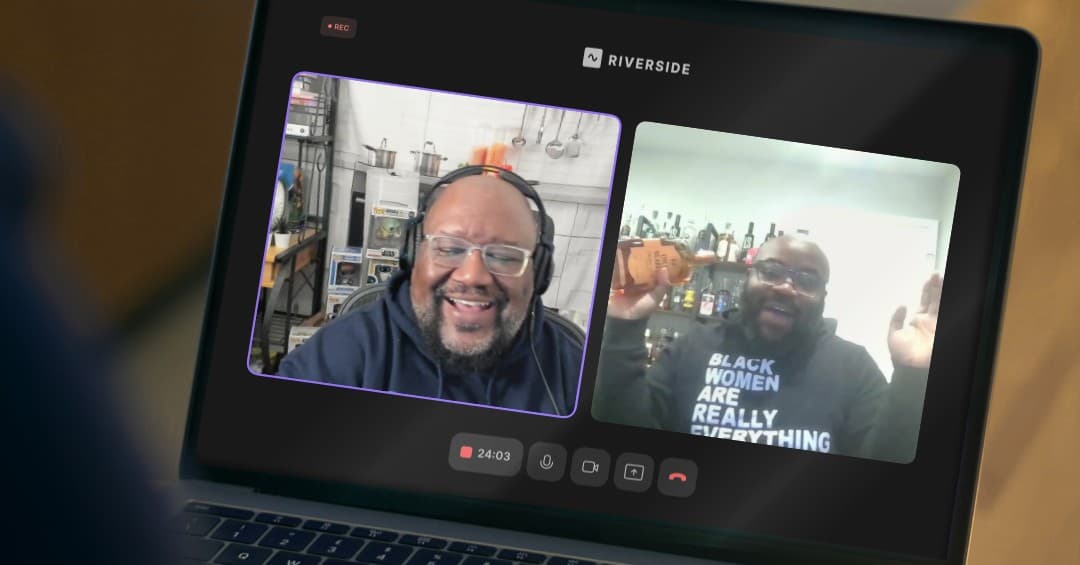
Episode 7 — Uncorking Conversations: How a Passion for Spirits Became a Movement for Black Excellence with Charles
Introduction:
In a world where passion often fuels purpose, few stories resonate as powerfully as that of UrFriendCharles. This podcast episode dives deep into his journey from a curious consumer to a spirited advocate for Black-owned alcohol brands. With an engaging blend of humor and sincerity, Charles shares how he turned a love for whiskey into a platform for celebrating Black excellence in the beverage industry.
Main Content:
-
The Spark of Inspiration UrFriendCharles’ journey began during the pandemic, a time when many searched for new hobbies and creative outlets. He stumbled upon Burr Brothers, a Black-owned distillery in Kentucky, which ignited his interest in exploring Black-owned spirits. His first experience at Chats on Capitol Hill, a historic Black-owned liquor store in DC, opened his eyes to a wealth of options, leading him to discover brands like Los Hermanos tequila and Foudre vodka. This moment was pivotal, as it sparked a deeper exploration into the stories behind these brands.
-
Building a Community Through Spirits As Charles began collecting bottles and inviting friends over, he found himself in a unique position to educate and share stories about each brand. This casual sharing soon morphed into a passion project. He started creating TikTok videos, focusing on tasting Black-owned spirits and telling the stories of their founders. Despite his early videos being less polished, his genuine enthusiasm attracted a following, proving that authenticity resonates more than perfection.
-
The Power of Connection A key theme in this podcast is the importance of community and connection. Charles emphasizes that you don’t need to be a celebrity to make an impact. He recalls an experience with Dante from Los Hermanos, who not only poured him a shot of tequila but also shared the story behind the brand. These personal connections enrich the experience of enjoying a drink and create meaningful relationships between consumers and producers.
-
The Challenge of Representation Throughout the discussion, Charles highlights the underrepresentation of Black individuals in the spirits industry. He passionately advocates for supporting Black-owned brands, challenging the stereotype that Black people are not present in this arena. By showcasing these brands, he helps to redefine the narrative and encourage others to explore and appreciate the diversity within the spirits world.
-
From Social Media to E-commerce In November, Charles had a vision to expand his impact by building a website dedicated to Black-owned spirits. His goal was to create a space where consumers could easily find and support these brands. This transition from social media influencer to entrepreneur illustrates the power of leveraging passion into purpose, creating a platform that promotes Black excellence in a traditionally overlooked industry.
Conclusion:
UrFriendCharles’ journey from a whiskey enthusiast to a celebrated advocate for Black-owned spirits is a testament to the power of passion and community. His story encourages us to support local brands, engage with the stories behind our favorite drinks, and redefine the narrative around representation in the beverage industry. Key takeaways include:
- Explore and support Black-owned brands.
- Understand the importance of personal connections in the industry.
- Use social platforms to share and celebrate authentic stories.
Tags: Black-owned brands, whiskey, spirits, community, representation in the beverage industry, entrepreneurship, TikTok creators, Black excellence.
December 24, 2025
How He Built The #1 Marketplace For Black Owned Spirits
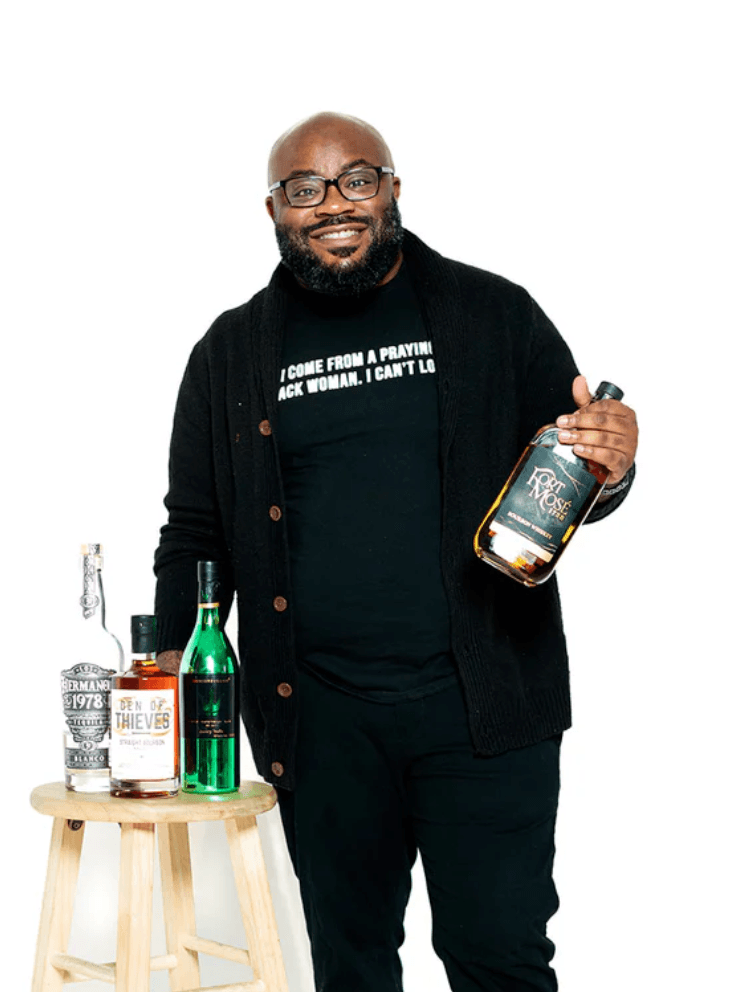
your guide in the world of Black-owned spirits, wine, beer, and beyond. What started as a simple search for Brough Brothers Bourbon has grown into UrFriendCharles, the largest digital platform dedicated exclusively to showcasing and selling Black-owned spirits.
With a background in supply chain management and a passion for storytelling, I set out to make it easier for people to discover, enjoy, and support underrepresented founders in the spirits industry. Because every great bottle comes with an even greater story — and those stories deserve to be heard.
What UrFriendCharles Is UrFriendCharles is more than a store — it’s an end-to-end system built to make discovering, supporting, and celebrating Black-owned spirits simple and meaningful.
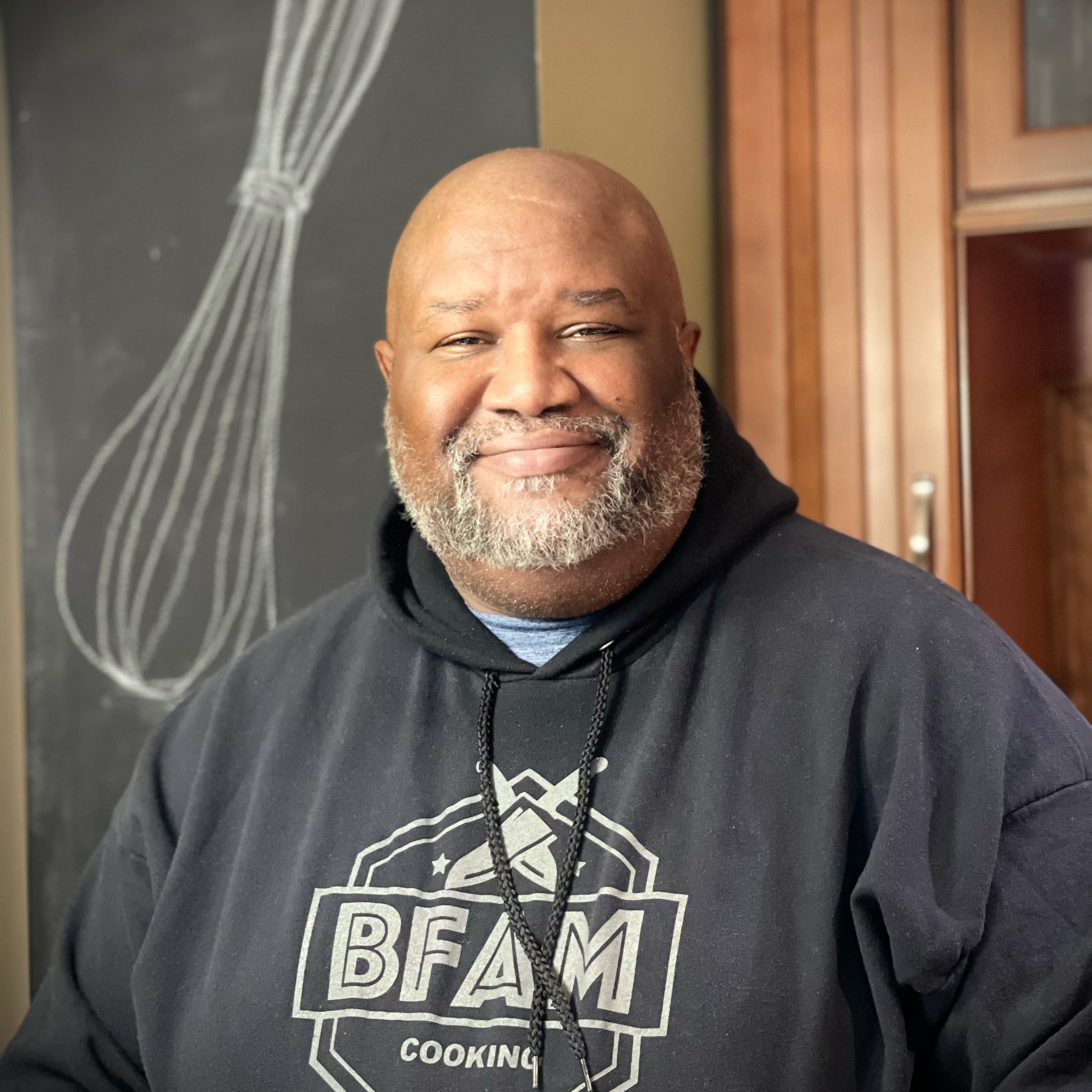
Jerome Amos
Jerome Amos builds things. Code. Food. Community. Platforms. Bread. Events. Careers. He moves through every domain of his life with the same restless, systematic curiosity — the same impulse to understand what's under the hood, get his hands in it, make it better, and then teach the next person how it works. He is, in the truest sense, a geek: not about any one thing, but about all things, approached with the same depth and the same discipline regardless of the domain.
What makes Jerome singular is not that he is a veteran who codes, or a software engineer who cooks, or a culinary storyteller with a military past. It is that for him, these are not separate identities stacked on top of each other. They are expressions of one identity, running on one operating system. The same principles — structure, craft, iteration, generosity, and an absolute refusal to leave people behind — show up identically whether he is writing a React component, developing a recipe, mentoring a junior developer, or shaping a loaf of bread at midnight.
That convergence is not a coincidence. It is the product of a life in which every chapter reinforced the same core truth: you learn, you build, and then you bring people with you. BFAM Cooking — Brothers From Another Mother — is where all of it lands.
The Why
Ask Jerome why he does any of this — the cooking, the platform, the bios of Black chefs, the veteran fundraisers, the late nights building features for a food website after a full day of enterprise engineering — and the answer is always some version of the same thing: because someone did it for him, and he has never forgotten that.
His Nana didn't have to share her recipes. She chose to. Florence Haywood — Mrs. Haywood, First Lady of the First Baptist Church of Bay Shore, Long Island — was Jerome's great aunt, his grandmother's sister, who stepped in and raised both Jerome and his mother after his mother had him at 16. She didn't have to do that either. She chose to. Florence was the wife of Pastor E.L. Haywood, a woman of deep faith and deeper purpose, who had stood in the pews of a convention hall in Kansas City in 1961 and watched Dr. Martin Luther King Jr. walk out to form the Progressive National Baptist Convention — a witness to history in a moment when choosing a side was not abstract. She came back to Bay Shore and kept building: the church, the congregation, the community, the kitchen. Her Pineapple Upside Down Cake. Her Southern Pan Fried Chicken. Her Chicken and Dumpling Soup. These were not just recipes. They were theology. They were her way of saying to everyone who came through that door: you are seen, you are fed, you belong here. Jerome carries every one of those dishes in his hands to this day.
That is the first and most foundational lesson he ever received about what family actually means: it is not biology. It is who shows up. It is who pulls up a chair, puts food on the table, and says — you belong here. The senior chefs in those early restaurant kitchens didn't have to explain the why behind the technique. Some of them did anyway. The Air Force didn't have to feel like family — but when you are responsible for each other's lives, it does. Jerome internalized all of it not as obligation, but as a model for how to move through the world. Knowledge is not a competitive advantage to be hoarded. It is a resource to be shared, because the table only gets better when more people know how to cook.
That is why the BFAM platform has a "People to Know" directory: because the chefs and food entrepreneurs shaping Black culinary culture deserve documentation that outlasts a social media post. That is why he taught at Pratt and FIT: because someone has to show design students that code is not the enemy of creativity. That is why he ran brown bag sessions at NBCUniversal when no one asked him to: because a rising tide is more interesting than a boat race. That is why he shows up at Fisher House in the Bronx and cooks at FourBlock fundraisers: because veterans transition better when someone at the table has already walked the road.
And the cookbook — the project he is now building toward — is the deepest why of all. It is his attempt to do for the next generation what Florence Haywood did for him. To say: here is what I know. Here is where it came from. Here is how you make it yours. The Pineapple Upside Down Cake starts here.
Origins: The Kitchen as the First Classroom
Jerome is a native New Yorker, raised in Bay Shore, Long Island, by his Nana — Mrs. Florence Haywood, great aunt, First Lady, community pillar, and the finest cook he has ever known. Florence was the wife of Pastor E.L. Haywood, who led the First Baptist Church of Bay Shore from 1950 onward, guiding a congregation that grew from 60 members into a cornerstone institution of the Long Island community. Florence was not a background figure in that story. She was the Women's Auxiliary. She was the missionary work, the educational programs, the kitchen that fed people when they needed feeding. In 1961, she traveled to Kansas City as an official Messenger to the National Baptist Convention and sat in the room as Dr. Martin Luther King Jr. walked out and history split in two. She came home to Bay Shore, to 108 Second Avenue, to the parsonage at 22 Cherry Street, and she kept going. She kept cooking. She raised Jerome's mother. And when Jerome's mother had him at 16, Florence raised Jerome too.
In that household, the kitchen was not a room. It was a philosophy. Pineapple Upside Down Cake. Southern Pan Fried Chicken. Chicken and Dumpling Soup. These were Florence's languages of love, and Jerome learned to speak them before he learned anything else. He absorbed her techniques the way other kids absorbed sports statistics — completely, instinctively, and with a hunger to replicate them. By age 10 he was cooking his own meals and running the grill at family BBQs. He did not yet have the language for what he was doing. He was debugging. He was iterating. He was learning to read a system and make it respond.
Boy Scouts gave him a structured framework for cooking in the field — his first experience of the principle that would later define both his military service and his engineering career: prepare thoroughly, execute cleanly, leave no one hungry. Sunday church potluck prep gave him his first audience and his first lesson in cooking as an act of community care. High school gave him his first professional kitchen — starting as a dishwasher, working up to kitchen prep, learning that a restaurant is a system and every position in it matters. That blue-collar foundation never left him. It is still visible today in how he writes code: no shortcuts, every component load-bearing, nothing in the kitchen or the codebase left to chance.
Military Service: Where the Operating System Was Built
Jerome served in the United States Air Force for over five years during the Gulf War era, and the experience did not just build discipline — it installed a worldview. The Air Force is, at its core, a systems organization: protocols, architecture, dependencies, fail-safes, chain of command. Every airman learns early that the individual is a component in a larger structure, and that the structure only holds if every component does its job with precision and integrity. Jerome would carry this framework directly into software engineering a decade later. You don't write sloppy code for the same reason you don't leave your post unattended: someone is counting on what you built.
The military also gave him mise en place as a philosophy before he ever learned the French term. In the Air Force, you do not improvise on readiness. You prepare, you stage, you verify, and then you execute. That is exactly what a professional kitchen demands — and what disciplined software development demands. The cooking is the easy part. The preparation is the discipline. Jerome arrived at both culinary practice and engineering already fluent in that language.
Perhaps most durably, the military gave Jerome his orientation toward mentorship as a duty rather than a favor. In the Air Force, you bring junior members up. You don't hoard knowledge — you share it, because the unit is only as strong as its least-prepared member. That ethic would later show up at NBCUniversal in brown bag lunch sessions on JavaScript frameworks. It would show up at Pratt and FIT in classrooms full of design students who needed someone to bridge the gap between code and creativity. It would show up in the BFAM "People to Know" directory, where Jerome has spent years writing detailed profiles of Black culinary figures who hadn't been given their proper documentation. The mission always includes bringing people along.
His commitment to the veteran community extends well beyond his own service record. Jerome has been actively involved with Blue Star Families and Fisher House in the Bronx, participated in FourBlock's veteran culinary fundraisers — cooking live alongside other veteran chefs to support career transitions — and joined the cominghomewell.com veteran podcaster network. He has appeared at Veterans Day events including a segment filmed at Tamela and David Mann's home for the Mann Family Dinner series. The throughline across all of it is the same Air Force ethos: you take care of your people.
Technology: Engineering as a Culinary Practice
Jerome's approach to software is the same as his approach to bread: understand the fundamentals, respect the process, and don't cut corners on what matters. A recipe is a program — inputs, outputs, conditions, variables, timing. "Cook until golden brown" is a conditional statement. Scaling a recipe for 200 people is an optimization problem. Debugging a dish that came out flat is the same cognitive process as debugging code that won't compile: read back through the steps, isolate the variable that changed, test the hypothesis. Jerome does not experience these as analogies. He experiences them as the same activity in different environments.
He is the founder and Chief Creative of Amosdesigns (amosdesigns.net LLC), a full-service consultancy spanning custom web development, print design, logo development, digital photography, and interactive web experiences — a practice that has been his consistent independent identity across GitHub, Medium, and the broader developer community for over a decade.
His most prominent corporate chapter was at NBC News / NBCUniversal, where he served as Senior Front-End Engineer for MSNBC.com. Working at the intersection of JavaScript, CSS, and accessibility on one of the country's most trafficked digital news platforms, Jerome distinguished himself not just as an engineer but as a force multiplier. He ran brown bag sessions on the latest JavaScript frameworks — the same instinct that had him walking newer cooks through technique in restaurant kitchens a decade earlier. He mentored junior developers into senior professionals. He held the bar on accessibility and coding standards with care rather than rigidity. Colleagues describe him as someone who "elevates the team by sharing everything he knows" — a sentence that applies equally well to his cooking. He was also a recognized leader within NBCUniversal's DEI Employee Resource Groups, running events across the Career, Culture, Commerce, and Community pillars.
From NBCUniversal, Jerome moved into fintech as a Senior Software Engineer at Clover Network (Fiserv), the point-of-sale and merchant payments platform serving small businesses nationwide — adding enterprise-scale engineering rigor and high-transaction product experience to an already deep technical profile. His core stack has evolved into React and TypeScript with Next.js, Prisma ORM, and Supabase — the same stack powering BFAMCooking.com, which he built entirely himself. He doesn't outsource what he can build. That is not stubbornness. That is the geek in him.
Academia: The Classroom as Another Kitchen
Jerome has taught Web Design, Web Standards, WordPress, and JavaScript Frameworks at both Pratt Institute and the Fashion Institute of Technology — simultaneously. The parallel is intentional. For Jerome, the classroom operates on the same logic as a professional kitchen: you break down complexity into fundamentals, you build confidence through repetition, you hold standards without holding people back, and you send people out more capable than they arrived. The Air Force trained him in this model. The kitchen reinforced it. The classroom is just another venue for the same practice.
Teaching design students to think in code, and emerging professionals to think about accessibility and standards, requires a rare ability to translate technical complexity into creative language — the same ability Jerome deploys when he explains culinary technique to a home cook who has never held a knife properly, or when he writes BFAM content for a food audience that did not come for a computer science lecture but leaves understanding something they didn't before.
BFAM Cooking: Where It All Lands
Brothers From Another Mother Cooking was born in a Costco aisle. Jerome crossed paths with his future co-founder Ellis over food — as these things tend to happen for Jerome — and what started as a backyard BBQ friendship became a YouTube channel that became something much larger. Fueled by years of culinary travel with his wife, including a formative food trip through Italy, Jerome and Ellis launched BFAM Cooking as a platform rooted in Black culinary tradition, community, and the conviction that the table belongs to everyone.
Today, BFAMCooking.com is a full-stack media platform — built and maintained entirely by Jerome — running on Next.js with Supabase as its backend and storage layer. It is, in one object, everything Jerome is: a software engineering project executed at professional grade, a culinary storytelling archive built with the care of a historian, a veteran's service ethic expressed through food, and a community platform designed with the same accessibility values he championed at NBCUniversal. The platform features original recipes, a podcast, a "People to Know" directory, a community section, a swag shop, and a rich archive of biographical profiles spotlighting chefs and food entrepreneurs from underrepresented communities — Chef JJ Johnson, Chef Michael Jenkins, Chef Roshara Sanders, KJ Kearney, Eric Dominijanni, Wallace "Wally" Amos Jr., and more — all researched and written by Jerome to give these voices a permanent, well-documented home.
Jerome was also a global finalist in the World's Favorite Chef competition — a fan-voted international contest with a $50,000 prize and a Bon Appétit feature on the line — reaching the semi-finals and placing third in his group out of competitors worldwide.
The Cookbook: Building Something Permanent
The next chapter Jerome is building toward is a cookbook — and if you understand who he is, you already know it will not be a simple collection of recipes. It will be a builder's book: part food memoir, part technique guide, part community archive. It will carry the same DNA as BFAM Cooking itself — rooted in Black culinary tradition, honest about the labor and love behind real cooking, and wide open at the table for everyone.
Jerome approaches the cookbook the way he approaches every project: with deep research, a long outline, a vision for the finished thing, and an absolute refusal to rush the craft. It is the most personal build of his career. Somewhere in its pages will be a Pineapple Upside Down Cake, Southern Pan Fried Chicken, and a Chicken and Dumpling Soup — recipes that belong to Florence Haywood and, through her, to Jerome, and through him, to anyone who comes to the table.
The Full Picture
Jerome Amos is a geek. That is the most complete word for him — a geek about food, its history, its chemistry, its power to define culture and identity. A geek about technology, about elegant architecture and the thrill of building something from nothing that actually works at scale. A geek about bread, about photography, about veteran community infrastructure, about the biographies of Black chefs who deserve more documentation than the internet has given them.
The thread through all of it is building. He builds a plate the way he builds a web platform: with structure, intention, and a user in mind. He approaches a recipe the way he approaches a codebase: with curiosity about what's under the hood, a willingness to refactor, and a commitment to leaving it better than he found it. He leads a kitchen the way he led in the Air Force: with standards, with care, and with the absolute conviction that the person next to you is your family. He teaches cooking the way he taught JavaScript at Pratt: by breaking complexity into clarity and making sure no one leaves the room behind.
Cooking, military, technology, community — these are not chapters in different books. They are the same book, written in different languages, all arriving at the same last line:
"Everyone can be your family. Especially at the table."